What to wear for flexibility training and splits work
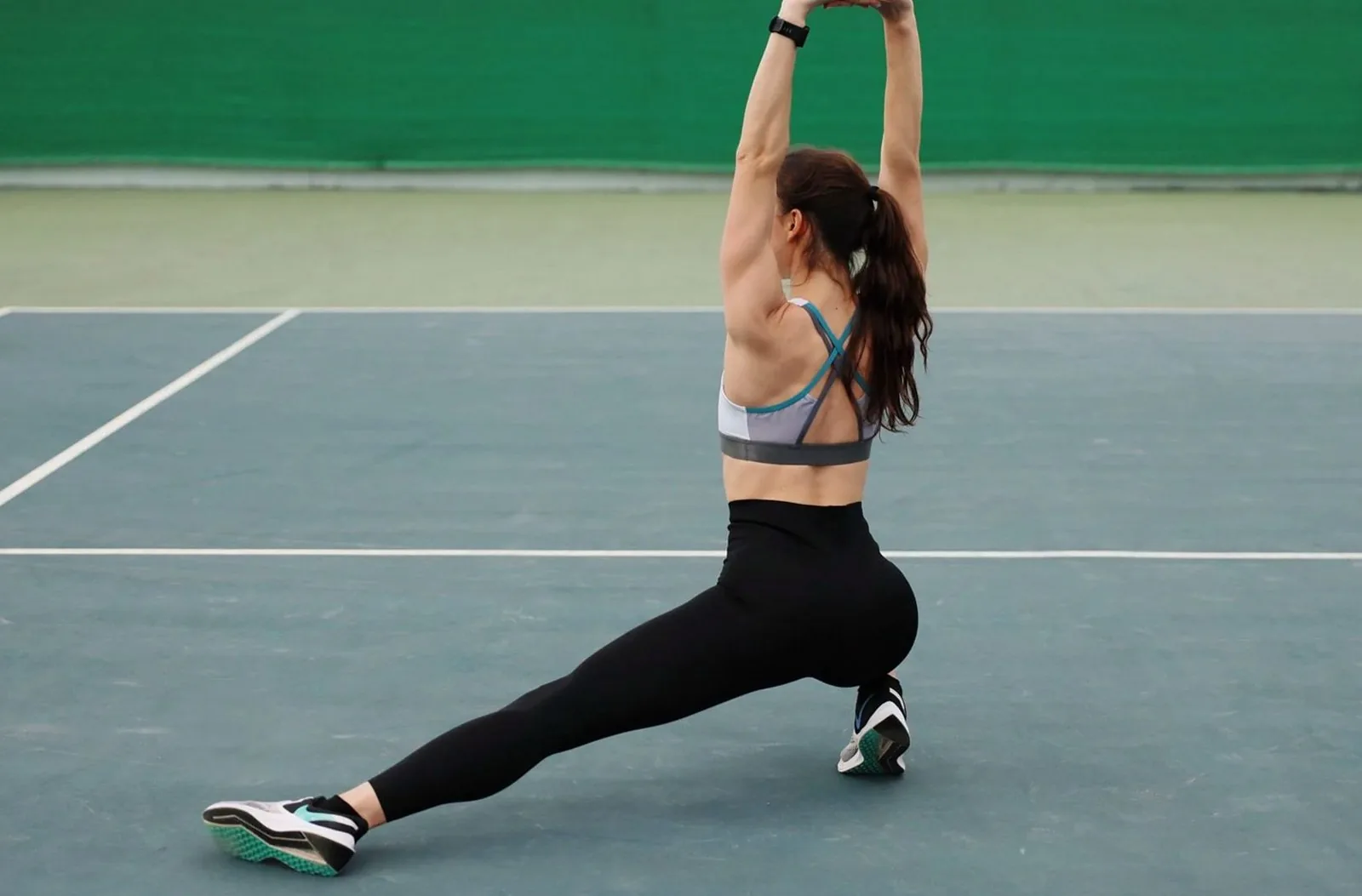
Flexibility training puts clothing under a different kind of stress than most other activities. You are holding positions for long periods, often in deep hip or hamstring stretches, and the fabric is under sustained tension rather than the dynamic tension of a reformer class or a run.
Sustained tension versus dynamic stretch
In a reformer class or a run, the fabric stretches and recovers repeatedly. In a flexibility session, you might hold a pigeon pose or a seated forward fold for 60 to 90 seconds. During that time, the fabric is under constant tension at the hip crease, the inner thigh, and the back of the knee. A fabric that recovers well from dynamic stretching may still dig in or create pressure points under sustained tension.
This is why the gusset geometry and the absence of side seams matter more for flexibility training than for almost any other activity. A seam at the inner thigh or a narrow gusset will create a pressure point that becomes increasingly uncomfortable over a long hold.
Temperature and layering in autumn and winter
Flexibility training often starts with a warm-up phase and moves into long static holds. During the holds, body temperature drops more than it does during dynamic exercise, which means you can feel cold even in a heated studio. A brushed-inner fabric, where the inside surface of the knit is slightly napped, adds warmth without adding bulk.
Layering a long-sleeve top over a sports bra is a practical approach for autumn and winter flexibility sessions. The top can come off during the warm-up and go back on during the long holds. Look for a top that is long enough to stay tucked in during forward folds, or that is cut to wear untucked without riding up.
What flexibility coaches tend to choose
Several flexibility coaches who use Paladin247 clothing have mentioned the same priorities: no side seams, a waistband that does not roll during forward folds, and a fabric that does not dig in at the hip crease during pigeon or lizard pose. The Stretching Set Classic and the Stretching Set Ribbed were both designed with these priorities in mind.
The ribbed version has slightly more compression, which some coaches prefer for the feeling of support it gives during deep backbends. The classic version is softer and more relaxed, which works better for long passive holds where you want the fabric to disappear.
The right clothing for flexibility training is mostly about what it does not do: it does not dig in, does not roll, does not pull. Once those problems are solved, you can focus on the work.